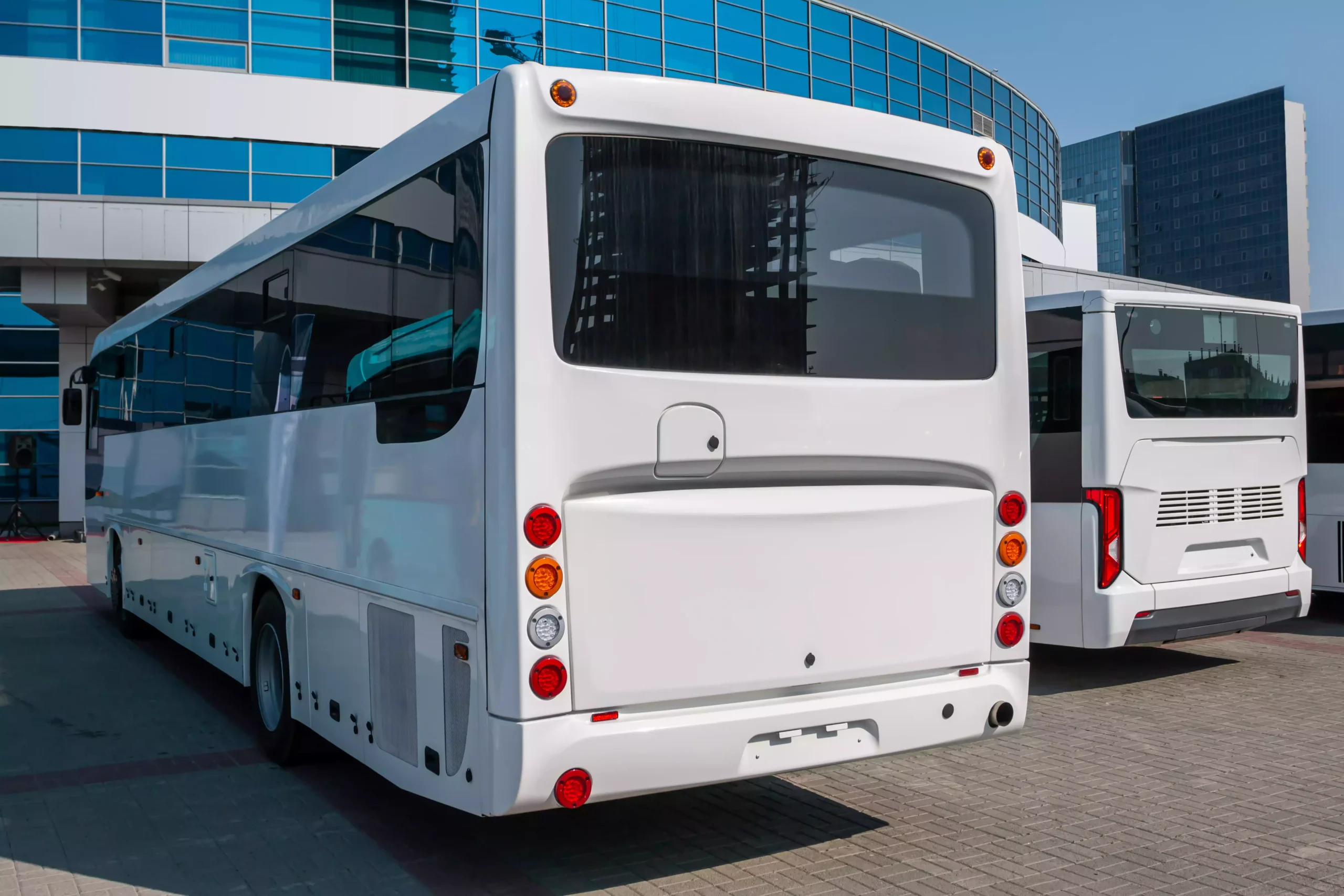
Chinese manufacturers engineer 12-meter diesel coaches for a design life of 1,000,000–1,200,000 km. That figure is not a marketing claim. Thousands of Yutong ZK6122 and King Long XMQ6127 units currently operate beyond 800,000 km on Chinese intercity highways. For used bus buyers, however, the right question is not “how long can this bus last?” Instead, ask: how many kilometers of economic life remain?
Remaining economic life = design life − current mileage − maintenance deductions − environment deductions.
This article gives you three practical tools: a five-stage mileage lifecycle model, a per-subsystem lifespan reference table, and a 15-minute residual value formula.
The 5-Stage Kilometer Lifecycle of a Commercial Coach Bus
Knowing where a bus sits on its lifecycle curve directly shapes your purchase decision.
| Stage | Mileage Range | Remaining Economic Life | Key Focus |
|---|---|---|---|
| 1. Golden Stage | 0–200,000 km | 10–12 years | Routine oil changes, wheel alignment |
| 2. Steady Stage | 200,000–500,000 km | 6–9 years | Clutch plates, brake shoes, water pump, AC compressor |
| 3. Critical Investment Stage | 500,000–800,000 km | 3–5 years | Engine overhaul, gearbox synchronizers, air suspension valves |
| 4. Extended Life Stage | 800,000–1,100,000 km | 1–3 years | Weekly frame weld inspection, monthly injector cleaning |
| 5. Retirement Zone | >1,100,000 km | Depends on corrosion | Crossmember corrosion assessment |
Why 500,000–800,000 km Offers the Best Value
Buses in this range sell for 30–45% less than comparable 200,000 km units in China. Moreover, a single engine overhaul costs only $3,500–$6,000. After that overhaul, the bus recovers 85–90% of original power. It then runs another 200,000–300,000 km without major rebuilds.
Consider this example: a 650,000 km Yutong ZK6122 at FOB $16,000 plus a $5,000 engine overhaul totals $21,000. That purchase delivers a 55-seat coach with 4–6 operational years ahead. The same bus at 200,000 km costs $32,000–$38,000.

Component-by-Component Lifespan: What Fails When
Different subsystems wear at different rates. Therefore, inspect each one independently before you commit.
| Subsystem | Typical Lifespan | Overhaul Cost | Pre-Purchase Check |
|---|---|---|---|
| Weichai WP10 Engine | 600,000–900,000 km | $3,500–6,000 | Blowby gases; oil use >1 L/1,000 km |
| ZF Gearbox | 800,000–1,200,000 km | $2,500–4,000 | Synchromesh engagement, reverse noise |
| Clutch Disc | 200,000–400,000 km | $800–1,200 | High bite point, burning smell at half-clutch |
| Air Bag Suspension | 400,000–600,000 km | $400–800 each | >15 mm sag after 4 hours parked |
| AC Compressor | 300,000–500,000 km | $600–1,200 | Outlet temperature >8°C after 20 min idle |
The Weichai WP10 and Cummins ISL powerplants dominate Chinese coach production. Both engines have well-documented bus engine life characteristics that directly determine the rebuild decision point.

The Real Lifespan Ceiling: Frame Corrosion, Not Engine Wear
Mechanical wear is manageable and predictable. However, frame corrosion sets the true retirement date — especially in tropical and coastal markets.
Three corrosion points demand close attention before purchase:
- Frame-to-crossmember gusset plates — trapped mud corrodes the steel from the inside. The outer surface looks intact while 3 mm steel reduces to 0.5 mm internally.
- Luggage compartment floor welds — salt and standing water crack welds and allow exhaust gases into the cabin below.
- Roof AC evaporator base — condensation rust perforates the roof skin and triggers electrical short circuits. This factor causes many of the most serious coach fires.
When evaluating coach bus durability in African operating conditions, tropical climate factors such as red-soil road dust and coastal salt spray demand specific maintenance countermeasures. Always apply full underbody anti-corrosion coating upon arrival ($500–$800). Additionally, prioritize buses with factory cathodic electrodeposition (CED) body coating.
How Fleet Buyers Calculate Remaining Economic Life
Use this formula for a fast 15-minute on-site assessment:
Remaining years ≈ (1,000,000 km − current mileage) ÷ annual mileage × maintenance quality factor
Example: A 2016 Yutong ZK6122 at 450,000 km, full service records, quality factor 0.95, and 80,000 km/year: Remaining mileage = (1,000,000 − 450,000) × 0.95 = 522,500 km ≈ 6.5 years
Maintenance quality factor guide:
| Factor | Condition |
|---|---|
| 1.0 | Full dealer records; no abusive driving history |
| 0.90–0.95 | Documented independent workshop service |
| 0.70–0.85 | Basic maintenance with incomplete records |
| <0.70 | No records or replaced engine — avoid this unit |
Extending total vehicle life to the million-kilometer mark depends on a rigorous preventive maintenance program. Consult our complete bus maintenance longevity checklist for interval-by-interval service requirements. For practical everyday habits that maximize commercial bus lifespan, review our guide covering operator-level checks that stop small issues from becoming rebuild-level failures. To locate vehicles still in the Golden and Steady stages, our guide to sourcing below the used bus mileage limit identifies the inventory sweet spot for minimal near-term capital expenditure.

Frequently Asked Questions
Q: How many kilometers can a Yutong bus last with proper maintenance?
— With consistent servicing, a Yutong coach reaches 800,000–1,200,000 km. The result depends on engine model and service discipline.
Q: At what mileage should a commercial bus be retired?
— The economic retirement point falls between 1,000,000 and 1,200,000 km. However, frame corrosion often ends a bus’s life before that point.
Q: Is a used bus with 500,000 km worth buying?
— Yes. The price drops significantly, and a $5,000 engine overhaul then delivers another 4–6 years of reliable service.
Q: How does African climate affect bus lifespan?
— Salt mist, red dust, and high heat together reduce chassis life by 2–4 years compared to temperate-zone operation.
Q: What matters more — age or mileage?
— Mileage gives you a more accurate picture. A 3-year urban bus at 200,000 km shows more wear than a 10-year tourist coach at 300,000 km.